

Co-Oximeter vs. Pulse Oximeter: A Comprehensive Comparison
Pulse oximeters and co-oximeters are critical tools for assessing blood oxygen levels, but they serve distinct purposes, employ different technologies, and cater to varied clinical and home needs. Understanding their differences is essential for choosing the right device, whether for general health monitoring or specialized diagnostics. At Turner Medical, we offer a range of pulse oximeters, including finger and ear models, designed for reliable, non-invasive monitoring. This detailed guide, spanning over 2000 words, explores the key differences between co-oximeters and pulse oximeters, covering their functions, measurement methods, applications, limitations, and the role of ear oximetry in pulse oximetry. Discover our pulse oximeter collection to find the perfect device for your needs.
What Are Pulse Oximeters and Co-Oximeters?
Both devices measure aspects of blood oxygenation, but their capabilities and applications differ significantly. Below, we define each and outline their primary functions.
Pulse Oximeter
A pulse oximeter is a non-invasive device that measures oxygen saturation (SpO2), the percentage of hemoglobin in arterial blood saturated with oxygen, and pulse rate (heartbeats per minute, bpm). It uses photoplethysmography (PPG), passing red (660 nm) and infrared (940 nm) light through a peripheral site like a finger, earlobe, or forehead to detect blood flow changes. Pulse oximeters assume hemoglobin is primarily oxygenated (O2Hb) or deoxygenated (HHb), providing a general estimate of oxygenation status.
Key Features:
- Non-invasive, portable, and easy to use.
- Delivers real-time SpO2 (typically 95–100% in healthy individuals) and pulse rate (60–100 bpm at rest).
- FDA-cleared devices achieve ±2–3% SpO2 accuracy and ±2–3 bpm pulse rate accuracy under optimal conditions.
Co-Oximeter
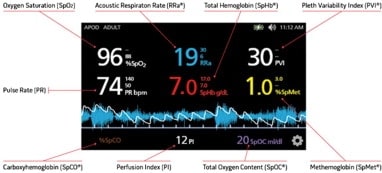
A co-oximeter is a device, typically invasive, that analyzes a blood sample to measure multiple hemoglobin species, including oxyhemoglobin (O2Hb), deoxyhemoglobin (HHb), carboxyhemoglobin (COHb), and methemoglobin (MetHb). It provides precise fractional percentages of these hemoglobin types and often measures total hemoglobin concentration. Co-oximeters are critical for diagnosing conditions involving abnormal hemoglobin, such as carbon monoxide poisoning or methemoglobinemia.
Key Features:
- Requires a blood sample (arterial or venous) for most models, though non-invasive versions are emerging.
- Uses multi-wavelength spectrophotometry for high precision (±1–2% for hemoglobin fractions).
- Primarily used in clinical settings for specialized diagnostics.
Key Differences Between Co-Oximeters and Pulse Oximeters
The differences between these devices span technology, measurement scope, applications, accessibility, and limitations. Below, we detail these distinctions to clarify their roles in healthcare.
1. Measurement Method
Pulse Oximeter:
- Non-Invasive: Clips onto a finger, earlobe (via ear oximetry), or forehead, using dual-wavelength PPG (red and infrared light) to measure light absorption by arterial blood.
- Technology: Employs transmittance oximetry (light passes through tissue, e.g., finger or earlobe) or reflectance oximetry (light reflects back, e.g., forehead). The ratio of absorbed light calculates SpO2, assuming minimal COHb or MetHb.
- Output: SpO2 and pulse rate, displayed in seconds (e.g., SpO2 98%, pulse 70 bpm).
- Challenges: Low perfusion (e.g., cold fingers, Raynaud’s Syndrome) or motion artifacts can reduce accuracy. Ear oximetry mitigates low-perfusion issues due to stable earlobe blood flow.
Co-Oximeter:
- Invasive (Typically): Analyzes a blood sample in a laboratory or point-of-care device, though non-invasive models use advanced sensors.
- Technology: Uses spectrophotometry with 6–8+ wavelengths (e.g., 500–1000 nm) to differentiate O2Hb, HHb, COHb, MetHb, and sometimes sulfhemoglobin.
- Output: Detailed hemoglobin profile (e.g., 90% O2Hb, 8% HHb, 2% COHb) and total hemoglobin concentration (g/dL).
- Challenges: Blood sampling is invasive, and results are delayed compared to real-time pulse oximetry.
2. Measurement Scope
Pulse Oximeter:
- Measures functional SpO2, reflecting the ratio of O2Hb to total hemoglobin capable of carrying oxygen (O2Hb + HHb).
- Cannot detect abnormal hemoglobin types like COHb (from carbon monoxide poisoning) or MetHb (from methemoglobinemia), which may falsely elevate SpO2 readings.
- Example: A patient with 20% COHb might show SpO2 of 95% due to COHb absorbing light similarly to O2Hb.
Co-Oximeter:
- Measures fractional SpO2 (O2Hb as a percentage of all hemoglobin, including COHb and MetHb) and quantifies abnormal hemoglobin types.
- Provides a comprehensive hemoglobin profile, critical for diagnosing conditions missed by pulse oximeters.
- Example: A co-oximeter might reveal 85% O2Hb, 10% HHb, 4% COHb, and 1% MetHb, indicating carbon monoxide exposure.
3. Applications
Pulse Oximeter:
- General Monitoring: Tracks SpO2 and pulse rate in real-time for broad applications, including:
- Spot Checks: Quick assessments in clinics or homes.
- Continuous Monitoring: ICUs, surgeries, or chronic conditions like COPD.
- Nocturnal Oximetry: Diagnosing sleep apnea via overnight monitoring.
- Fitness and Altitude: Monitoring during exercise or high-altitude activities.
- Ear Oximetry: Ideal for low-perfusion scenarios (e.g., hypothermia, peripheral vascular disease), as earlobes maintain stable blood flow. “My ear oximeter was a lifesaver in cold weather,” shares a Turner Medical customer. Shop ear oximeters.
- Advantages: Portable, cost-effective, and user-friendly for home or clinical use.
Co-Oximeter:
- Specialized Diagnostics: Used in clinical settings for precise hemoglobin analysis, particularly for:
- Carbon Monoxide Poisoning: Detects elevated COHb levels.
- Methemoglobinemia: Identifies MetHb from medications or toxins.
- Anemia or Blood Loss: Measures total hemoglobin concentration.
- Scenarios: Emergency rooms, critical care units, or laboratories for blood gas analysis.
- Advantages: Detects abnormal hemoglobin types, guiding targeted treatments (e.g., oxygen therapy for CO poisoning, methylene blue for MetHb).
4. Limitations
Pulse Oximeter:
- Inability to Detect Abnormal Hemoglobin: Misinterprets COHb or MetHb as O2Hb, leading to falsely normal SpO2 readings, missing conditions like CO poisoning.
- Low Perfusion: Poor circulation (e.g., cold fingers, shock) weakens the PPG signal, though ear oximetry reduces this issue.
- Interference: Motion artifacts, ambient light, nail polish, or skin pigmentation can skew readings by 5–10%.
- General Use Only: Not diagnostic for specific hemoglobin-related conditions, requiring further testing.
Co-Oximeter:
- Invasive Process: Blood sampling is uncomfortable and requires trained personnel, limiting home use.
- Time Delay: Laboratory analysis takes minutes to hours, unlike real-time pulse oximetry.
- Cost and Complexity: Expensive equipment and operation restrict accessibility to clinical settings.
- Limited Non-Invasive Options: Emerging non-invasive co-oximeters are less common and may have reduced accuracy compared to invasive models.
5. Technology and Design
Pulse Oximeter:
- Design: Compact, portable devices (e.g., finger clips, wrist wearables, ear sensors) for home or clinical use.
- Technology: Dual-wavelength PPG with algorithms to filter motion or low-perfusion noise.
- Features: May include perfusion index (PI), signal quality indicators, or Bluetooth Low Energy (BLE) for data syncing to apps.
- Example Output: SpO2 97%, pulse rate 72 bpm, displayed in seconds.
Co-Oximeter:
- Design: Benchtop laboratory units or portable point-of-care devices, with non-invasive models resembling pulse oximeters.
- Technology: Multi-wavelength spectrophotometry, analyzing blood samples or using advanced non-invasive sensors.
- Features: Outputs detailed hemoglobin profiles and total hemoglobin concentration.
- Example Output: 88% O2Hb, 9% HHb, 2% COHb, 1% MetHb, total hemoglobin 14 g/dL.
6. Cost and Accessibility
Pulse Oximeter:
- Cost: Affordable, ranging from $20–$200 for home or clinical models, with ear oximeters slightly higher due to specialized sensors.
- Accessibility: Widely available over-the-counter or through suppliers like Turner Medical.
- Ease of Use: No training required, ideal for patients, caregivers, or athletes.
Co-Oximeter:
- Cost: Expensive, with laboratory units costing thousands and point-of-care devices $500–$5000.
- Accessibility: Limited to hospitals, clinics, or labs, requiring professional operation.
- Ease of Use: Invasive models need trained personnel; non-invasive models are simpler but rare.
7. Clinical Relevance
Pulse Oximeter:
- Role: Monitors general oxygenation and detects hypoxemia (SpO2 <90%), suitable for routine or emergency use.
- Limitation: Misses abnormal hemoglobin conditions (e.g., CO poisoning showing normal SpO2).
- Example: A pulse oximeter might falsely indicate normal SpO2 in a patient with carbon monoxide poisoning, necessitating further testing.
Co-Oximeter:
- Role: Diagnoses specific hemoglobin-related conditions by quantifying COHb, MetHb, or total hemoglobin.
- Strength: Guides targeted treatments (e.g., oxygen therapy for CO poisoning, methylene blue for MetHb).
- Example: A co-oximeter detecting 15% COHb confirms carbon monoxide poisoning, prompting immediate intervention.
Summary of Key Differences
This table summarizes the primary differences between co-oximeters and pulse oximeters for quick reference:
| Feature | Pulse Oximeter | Co-Oximeter |
|---|---|---|
| Measurement | SpO2, pulse rate | O2Hb, HHb, COHb, MetHb, total hemoglobin |
| Method | Non-invasive PPG (dual-wavelength) | Invasive spectrophotometry (multi-wavelength) |
| Applications | General monitoring, ear oximetry for low perfusion | Specialized diagnostics (e.g., CO poisoning) |
| Accuracy | ±2–3% SpO2, ±2–3 bpm | ±1–2% hemoglobin fractions |
| Limitations | Cannot detect COHb/MetHb, low-perfusion issues | Invasive, costly, less accessible |
| Cost | $20–$200 | $500–$5000+ |
| Accessibility | Home, clinical, over-the-counter | Hospitals, labs, professional use |
Note: Ear oximetry enhances pulse oximetry in low-perfusion scenarios. Shop ear oximeters.
Role of Ear Oximetry in Pulse Oximetry
Ear oximetry, a subset of pulse oximetry, uses clip-on or wrap sensors on the earlobe to measure SpO2 and pulse rate. It’s particularly valuable when finger oximetry fails due to poor circulation, as seen in conditions like Raynaud’s Syndrome or hypothermia. The earlobe’s proximity to central circulation ensures a stronger perfusion index (PI, often >1%), improving signal quality. Ear oximeters are less affected by motion artifacts or ambient light, making them ideal for:
- Low-Perfusion Patients: Reliable readings in critical care or cold environments.
- Continuous Monitoring: Stable data during prolonged use, such as nocturnal oximetry.
- Specialized Settings: MRI-compatible ear sensors for safe monitoring.
While ear oximetry shares the same limitations as pulse oximetry (e.g., inability to detect COHb), it enhances accuracy in challenging conditions, complementing the broader pulse oximetry framework.
Choosing the Right Device
When to Use a Pulse Oximeter:
- Need quick, non-invasive SpO2 and pulse rate monitoring.
- Monitoring general health, fitness, or chronic conditions like COPD.
- Require portability and affordability for home or travel use.
- Low-perfusion scenarios, where ear oximetry is a viable option.
When to Use a Co-Oximeter:
- Suspect abnormal hemoglobin (e.g., CO poisoning, methemoglobinemia).
- Need precise hemoglobin speciation or total hemoglobin measurement.
- Clinical settings with access to blood sampling and professional staff.
For most home users or general clinical monitoring, a pulse oximeter, including ear oximetry models, is sufficient. For specialized diagnostics, a co-oximeter is indispensable, often used in conjunction with pulse oximetry for comprehensive care.
Why Choose Turner Medical for Pulse Oximetry
Turner Medical offers FDA-cleared pulse oximeters designed for accuracy and reliability, including finger and ear models optimized for low-perfusion scenarios. Our devices feature advanced signal processing, perfusion index displays, and motion tolerance to ensure precise readings. “Turner Medical’s ear oximeter transformed my monitoring in cold conditions,” shares a customer, praising our quality and support. With fast shipping and expert guidance, we empower you to monitor your health confidently.
Conclusion: Pulse Oximeter vs. Co-Oximeter
Pulse oximeters and co-oximeters serve distinct roles in healthcare. Pulse oximeters provide non-invasive, real-time SpO2 and pulse rate monitoring, ideal for general use, with ear oximetry enhancing reliability in low-perfusion scenarios. Co-oximeters offer detailed hemoglobin analysis, critical for diagnosing conditions like carbon monoxide poisoning, but require invasive blood sampling and clinical settings. By understanding their differences, you can choose the right tool for your needs. Turner Medical’s pulse oximeters deliver precision and ease, supporting better health outcomes. Shop now to find your ideal device.